


Sustainability & Efficiency
For us, sustainability doesn’t mean sacrifice — it means progress. Through efficient processes, resource-saving materials, and innovative technologies, we develop solutions that combine environmental responsibility with economic viability.

Turning Waste into Resource
Around the equator, palm trees are cultivated on an industrial scale. This produces waste that is difficult to compost and often ends up in landfills. From these unused residues, we can generate new, sustainable value.
The Challenge

Deforestation
10 million hectares of forest lost annually (FAO 2023)
– 4 billion m³ of wood harvested every year
– 60% of this is used for furniture and construction
– Over 100 million tons of wood-based materials are traded worldwide.

Environmental Impact
CO₂ emissions: approx. 3 Gt/year from deforestation (~10% of global emissions)
Loss of biodiversity: logging reduces forest habitat diversity
Soil erosion: up to 150 tons per hectare per year in tropical regions

Deglobalization
– Deglobalization: Reshoring trends and geopolitical tensions reduce raw material sourcing flexibility
– Supply chain disruptions: port congestion, container shortages, and trade bottlenecks affect delivery times and inventory planning
– Tariffs: duties can significantly increase material costs
– Currency risks: volatile exchange rates increase procurement uncertainty
Our Solution

Abundant Starting Material
Over 200 million tons of unused palm biomass are available worldwide each year. Palllm® aims to improve the ecological balance of plantation agriculture by making full use of all plant components!

Environmental Protection Instead of Further Destruction
By using agricultural residues, we avoid additional negative impacts such as soil erosion and biodiversity loss. CO₂ is stored long-term, resulting in a negative carbon footprint.

Advantages of Regional Value Creation
Processing raw materials directly in the country of origin delivers multiple benefits: Job creation, Support for the regional economy, Avoidance of long transport routes, Reduced dependency on tariffs and currency fluctuations

Sustainability Doesn’t Have to Be Expensive
Beyond positive regional economic impacts, Palllm® is economically competitive. Depending on raw material availability, our processes are at least comparable to established wood-based manufacturing methods — often offering higher profitability. Individual consultations can demonstrate the business case for your project.
Alternative Waste Management
Expensive waste disposal is avoided: residue becomes resource. Our process ensures compliance with current and upcoming regulations on waste prevention and elimination through upcycling of previously unused resources.
The Palllm® Value Chain Begins with Three Types of Palm Trees
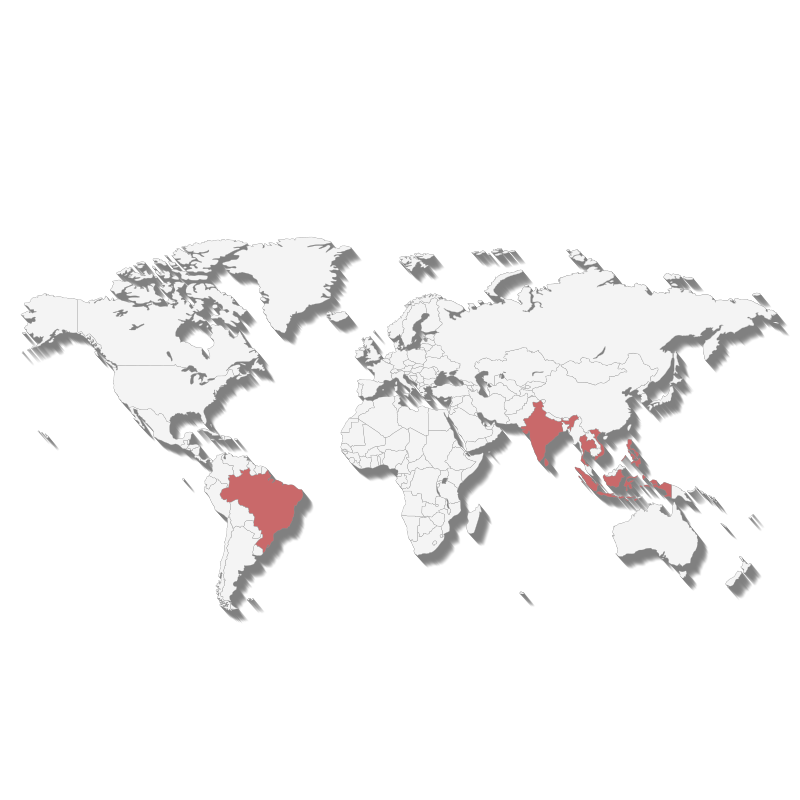
Coconut Palm
Countries: Indonesia, Philippines, India (~70–75%), Brazil, Sri Lanka, Vietnam, Thailand
Cultivated area: >>11 million ha
Annual production: 60–65 million tons of raw coconuts
Yield: 5.8 t/ha
Uses: coconut milk, water, flesh, oil
Residual applications: mats, ropes, brushes, insulation, fuel, basketry
>Estimated number of trees: >1 billion
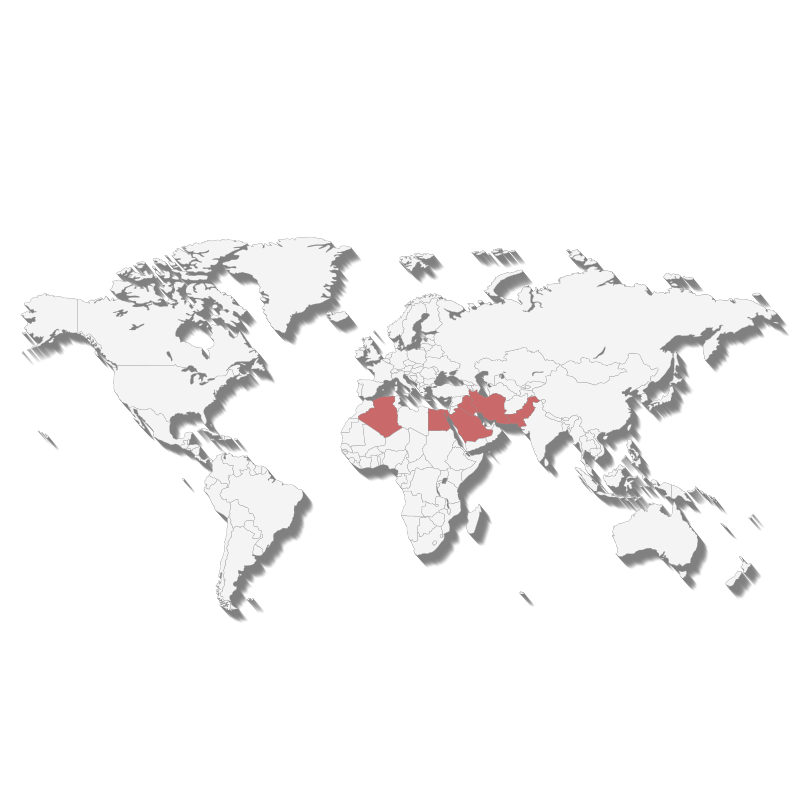
Date Palm
Countries: Egypt, Saudi Arabia, Algeria, Iran, Pakistan, Iraq, UAE
Cultivated area: ~1.1 million ha
Annual production: ~9.7 million tons
Yield: 6 t/ha
Uses: dates, syrup, paste
Residual applications: fuel
Estimated number of trees: 100 million
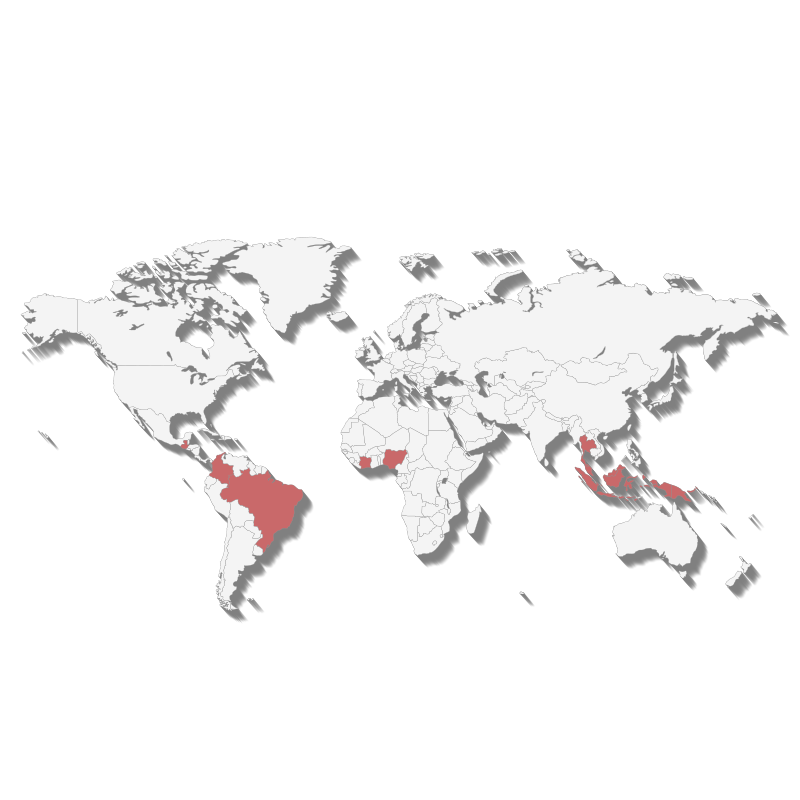
Oil Palm
Countries: Indonesia, Malaysia, Thailand, Colombia, Nigeria, Guatemala, Papua New Guinea, Brazil, Côte d’Ivoire
Cultivated area: 20 million ha
Annual production: 77.3 million tons of palm oil
Yield: 17–18 t/ha
Uses: food, cosmetics, animal feed, biodiesel
Residual applications: biomass, fuel
Estimated number of trees: 2 billion

Alternative Resources
Besides palms, other fast-growing plant fibers can be used. Our technology has successfully processed grasses such as Miscanthus and, in collaboration with partners like hemp producers, allows the development of customized new materials.
Formaldehyde-Free Binder

Naturally Strong — Completely Fossil-Free
For our boards, we use an innovative, 100% bio-based binder, made entirely from plant-based raw materials and industrial by-products. Free of formaldehyde, isocyanates, and synthetic resins, it makes our material a fully sustainable solution throughout its life cycle.
Why This Binder is Unique

Biobased from the Start
Made entirely from plant and industrial by-products, ensuring an eco-friendly solution from raw material to finished product.
Locally Producable
Many of the raw materials used are regionally available – this means the binder can also be produced directly on-site in the future.

Free of Harmful Substances
A true NAF product (Non-Added Formaldehyde) with zero formaldehyde emissions and significantly reduced VOCs, improving both environmental footprint and indoor air quality.

Energy-Efficient
Up to 85% less energy consumption compared to conventional MUF resins, reducing CO₂ emissions and supporting a circular economy.

Full Performance
Mechanical strength comparable to conventional resins, with high moisture resistance and aging stability.

One-Component System
Ready-to-use, water-based, easy to handle, and stably storable.
Safe for People and the Environment
This binder is not only sustainable, but also safe:

Water-based cleaning (no solvents

Non-toxic

Fully recyclable or thermally reusable

And even scavenges formaldehyde from recycled streams

Sustainability in Action — From Field to Finished Product
Through the combination of 100% upcycling of palm residues and a fully bio-based binder, Palllm® creates a material that is ecological, technically robust, and economically viable.
We set a new standard: a material that connects nature with innovation and offers a true alternative to wood and fossil-based adhesive systems.